
Four flowers have been devised that romantically transform into the cacao tree. Gathering inspiration from Mesoamerican mythology and the Nahuatl language of Mexica (Aztecs), these flowers have been brought to life as if they actually existed. Embedded in a world full of beautiful and deceitful animals worshiping the flora of the intoxicating forests of Central America, these images explore romance, betrayal, thievery and the transformation from evil into pure wonder. Imagined as antique botanical illustrations on paper including names loosely based on Nahuatl words, these colored pencil drawings evoke the fragrant desires and the intoxicating allure of chocolate.
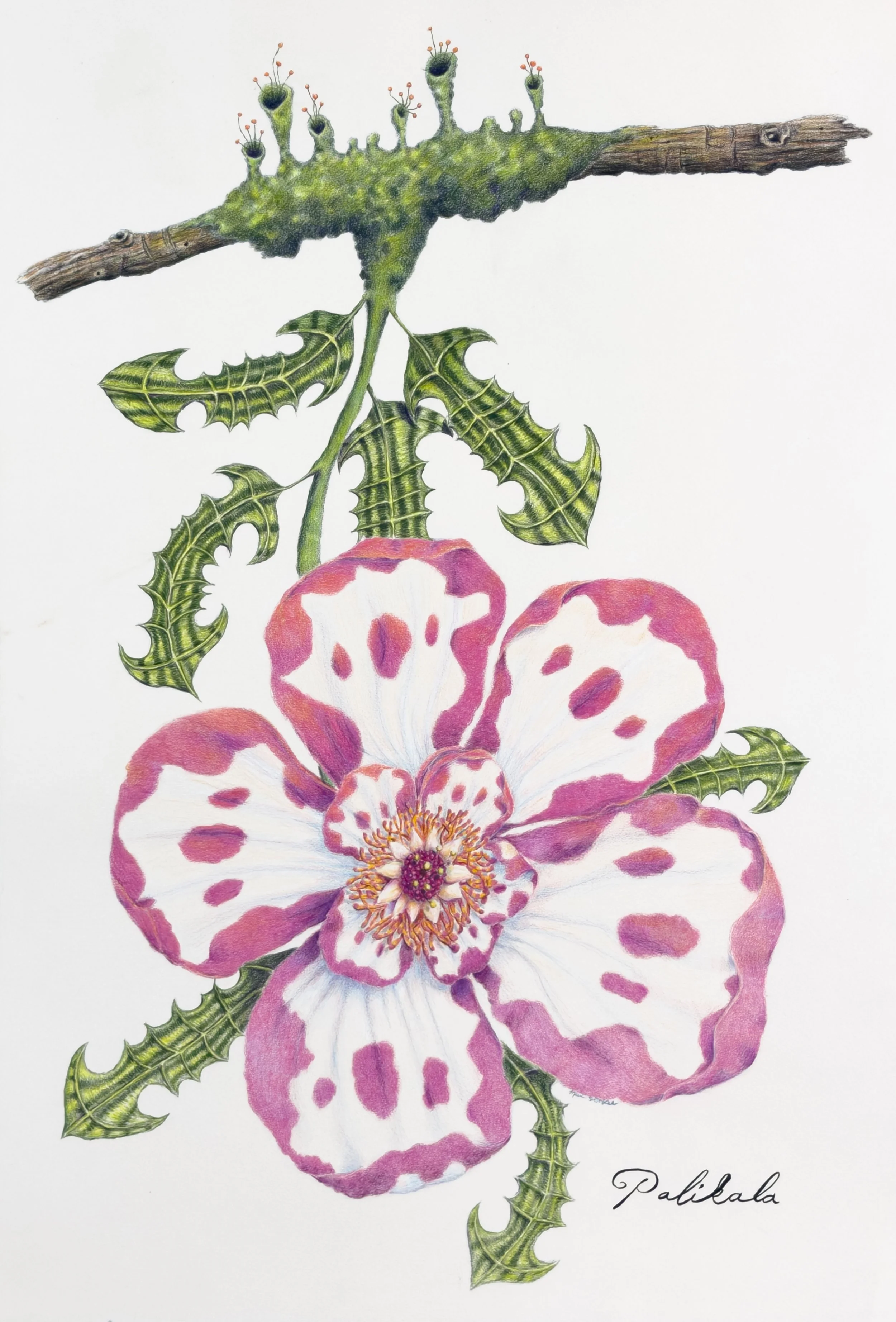
Palikala
Palikala bloomed in twilight and shared its beauty throughout the night. It was a parasitic flower rooting itself on low hanging tree branches. The powerful jaguar had fallen deeply in love with the Palikala and bestowed upon it many of his own qualities. Insects who drank of its nectar were emboldened with great strength and ferocity. Its fragrance was a savage blend of blood and sweetness. The maned wolf grew jealous of the jaguar and his connection to the alluring flower. He sought to separate the two. In his insatiable rampage, all but one Palikala were destroyed. That one was found by the jaguar and lovingly carried into paradise. With all of its magic, the jaguar joined the Palikala with the cacao tree, and it continues to infuse life with wild energy.
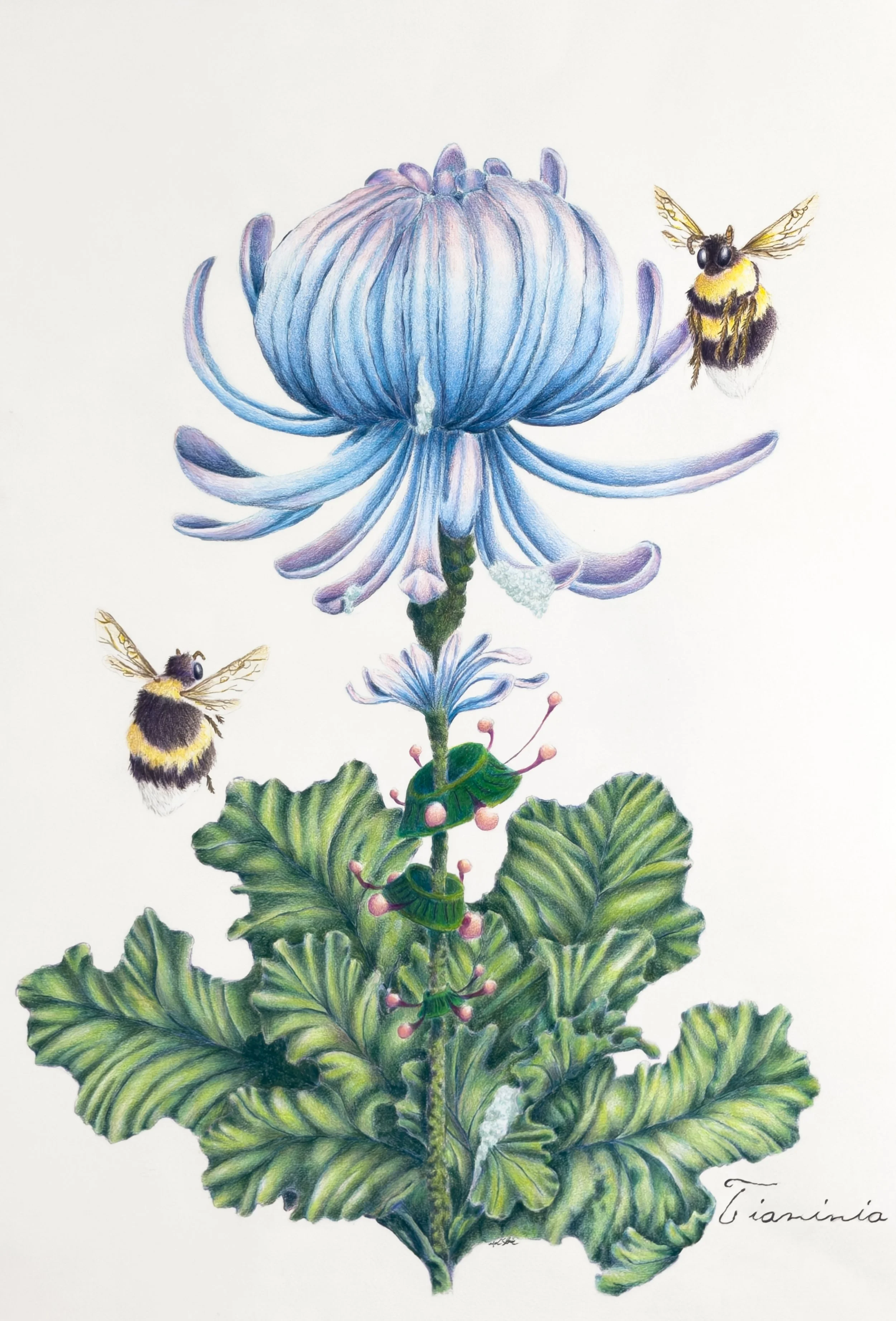
Tianinia
Tianinia was a truly, unique flower. Upon its stem grew rings that spun in the wind while permeating the air with an intoxicating aroma. As the fragrance wafted out of the flower it made a sound like singing. The mischievous coati was enamored with the Tianinia’s music. He was often lured in to dancing with the bees around the flower inebriated by the mixture of sound and smell. In the spring, the flower bloomed and a sweet, foamy milk drizzled out from its petals which the bees used to make their honey. Eventually, in his foolishness, coati was tricked into trading every last Tianinia in the world for a look into the mysterious cave of the porcupine queen. She told him many lies and promised wonders beyond his tiny imagination. The porcupine kingdom took the Tianinias and drained them of their milk. They became so drunk that they slept for days. The queen drank more than all the other porcupines and turned her quills blue. She too passed into ending along with the Tianinias. Her quills were gathered by the nearby villagers and offered to the forest. They were taken into paradise and there the precious milk was extracted and blended into the base of the cacao tree.
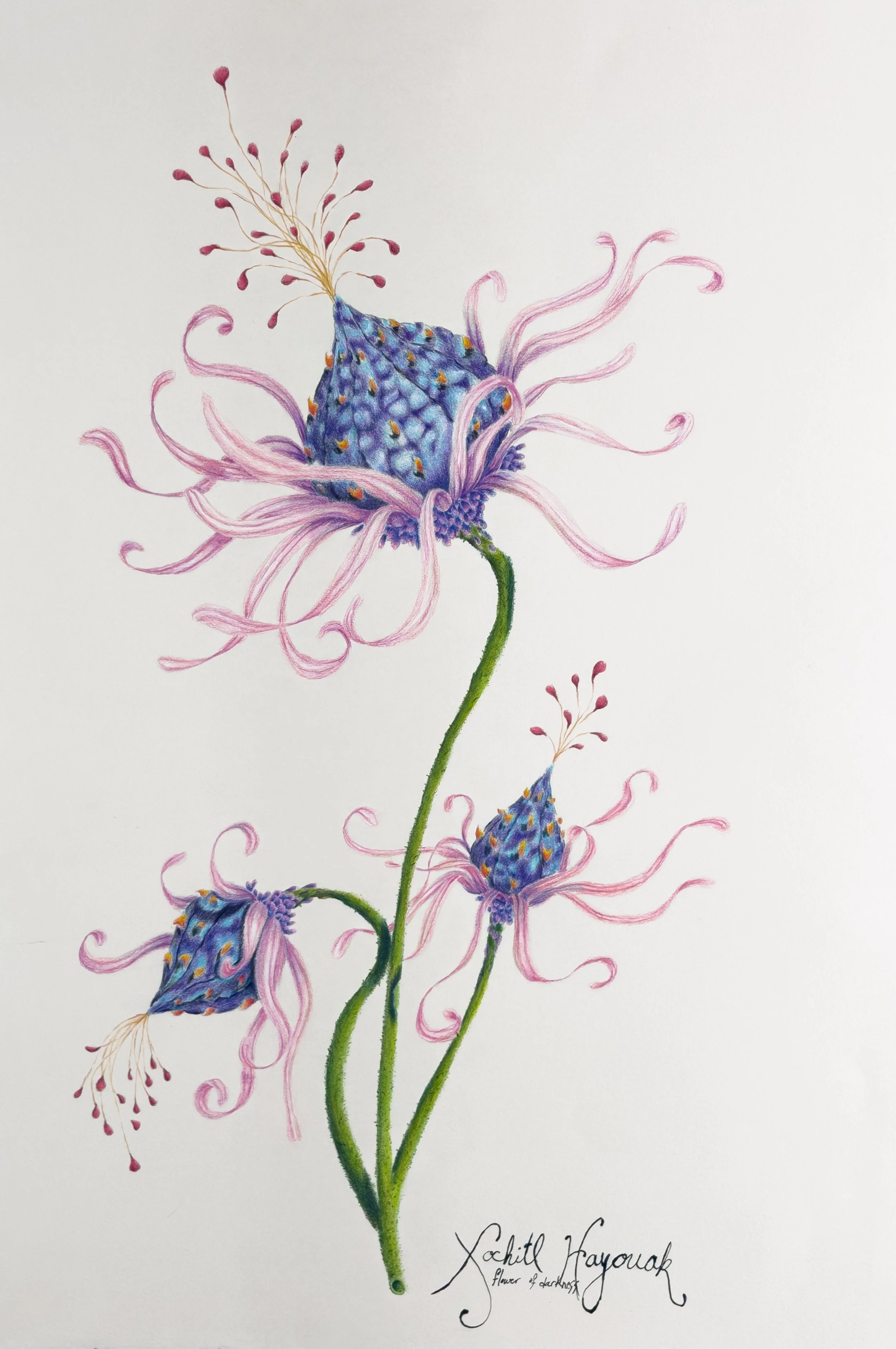
Xochitl Hlayouak
The flower of darkness, otherwise known as the Magic Thief, was a treacherous creation. Growing isolated, in the murky underbrush, it subsided by luring and trapping hummingbirds with an irresistible, earthy, sweet fragrance. Nectar glands extended out through a pod-like tomb while the petals undulated to transmit the aroma like an intoxicating fog. When the hummingbirds touched the nectar glands, the pod opened and the sticky tendrils trapped the poor bird and drew it down while the pod closed around it. There is not enough evidence to prove how it murdered such a beautiful creature, but botanists think the nectar numbed its prey before crushing its precious body. The magic thief was found too malicious by the gods and sentenced to an ending of its species. However, the eagle showed mercy on the flower and transformed its destructive hunger into a more earthly desire for pleasure. She shaped its fragrant essence into an integral part of the cacao tree.
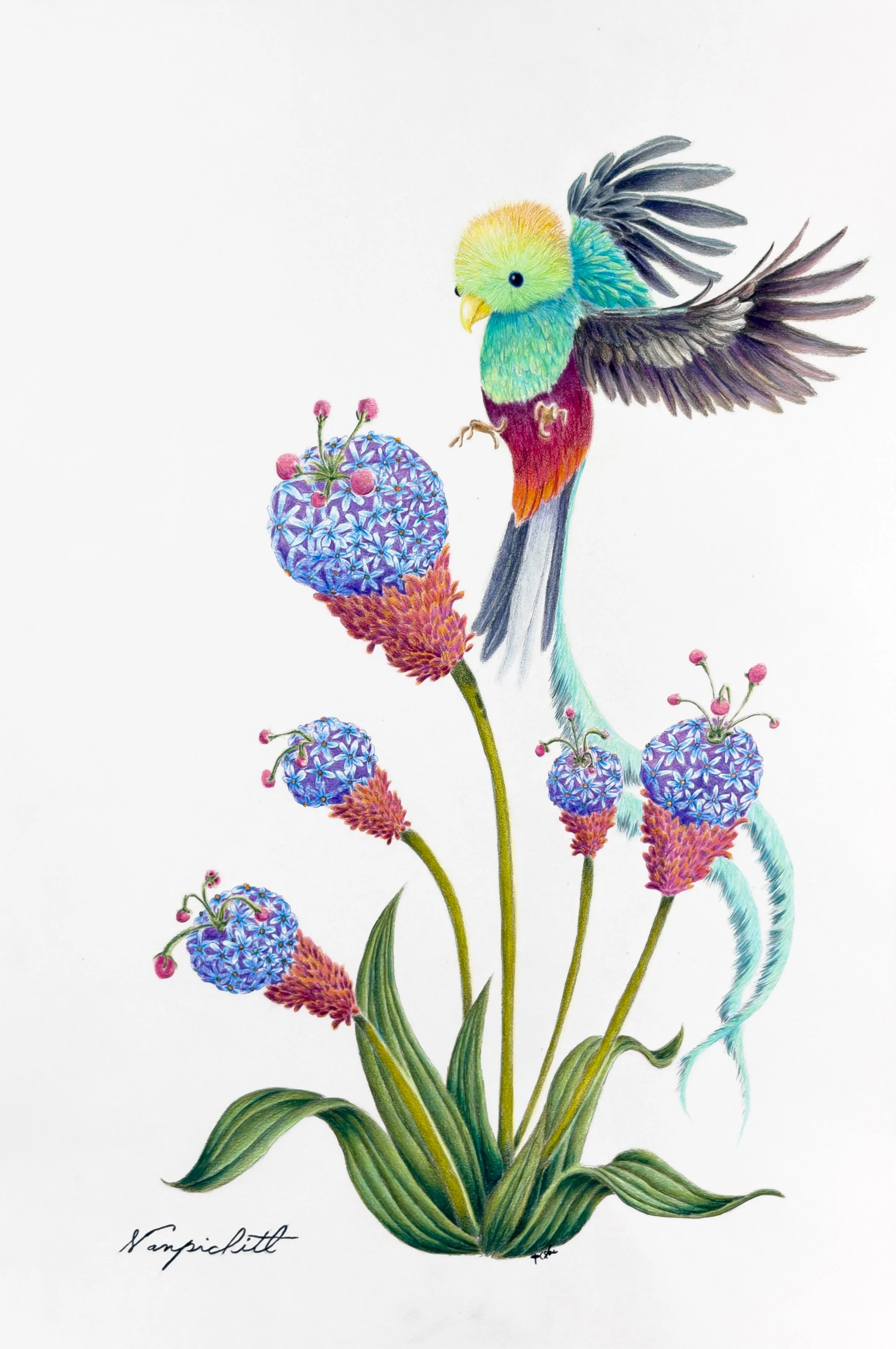
Nanpichitl
Nanpichitl or Mother of Bitter Children was a bulbous plant with a large, central flower (the mother) and multiple smaller flowers (the children) growing around it. There was no other plant like it in all the gardens of the Earth. Nanpichitl was a favorite of the quetzal. She didn’t drink the nectar but daily perfumed her wings, first with the pollen from the mother flower which was sweet and then from the children which were bitter. She would flit back and forth until her brain buzzed with ecstasy. Because of this combined fragrance and the effect it had on those who smelled it, the quetzal was considered royalty and revered everywhere. However it amazed those on Earth, it also drew attention of those above and below. One morning as the quetzal was in her ritual of bathing,an owl stepped out from the shadows spreading the dust of the underworld with every step. The owl thought the quetzal too simple of a bird to be honored with so rich a fragrance. He tore Nanpichitl frome its roots and flew away with it. The quetzal was so horrified and saddened by the loss that she never bathed again. The owl gave Nanpichitl to the cacao tree for its completion.
These images were created for The Indigenous Story of Cacao; an exhibition at Radar Projects in Nashville, TN. Open from November 18, 2026 through January 1, 2027. The originals are for sale at the gallery and prints will be available soon through my upcoming store to be added to this website soon.